
Views: 0 Author: Site Editor Publish Time: 2026-06-05 Origin: Site


Modern homes need more than good looks. They need light, air, quiet rooms, and lower energy waste. Casement windows can meet these needs well, but only when the frame, glass, seal, and opening style fit the project. In this article, you will learn where they work best and where they may not.
● Casement window is a strong choice for modern homes that need wide ventilation, clean exterior lines, and better sealing.
● They work well in bedrooms, living rooms, kitchens, villas, apartments, and light commercial spaces when opening clearance is planned early.
● They may perform better than sliding windows for air tightness, but sliding windows can be better where space is tight.
● Glass selection matters. Double glazing, Low-E glass, laminated glass, or acoustic glass should match climate, noise, and safety needs.
● For project buyers, the best choice depends on specifications, installation support, customization, delivery needs, and long-term service.
Yes, casement windows are often a good fit for modern homes. They suit homes that need fresh air, tight sealing, clean design, and better energy control. Their side-hinged sash opens wide, so air can enter the room more directly than many half-opening window types.
They also support a modern look. Aluminum casement windows can use slim frames, large glass areas, and simple color finishes. This works well for villas, apartments, townhouses, and new residential projects. Many product options in the casement window category focus on energy efficiency, large-format glass, weather resistance, noise reduction, Low-E glass, smart-home use, and condensation control.
Still, they are not perfect for every space. A casement sash needs room to open. If there is a narrow walkway, balcony rail, exterior screen, or strict facade rule, another window type may work better. The right question is not only “Are they modern?” The better question is “Do they match the room, climate, wall opening, and project budget?”
Tip:Before confirming an order, check opening direction, wall depth, glass weight, and exterior clearance on the actual drawing.
Modern homes often use large glass areas, simple lines, and neutral colors. Casement windows fit this style because their frame can look clean and structured. They do not need bulky vertical sliding rails across the center, so the view can feel more open.
Aluminum frames are especially useful for this design goal. They can support strong structures while keeping a neat profile. Official product information shows casement options using aluminum frames, thermal break structures, Low-E insulated glass, powder-coated finishes, and outward opening designs. These features match the way many modern homes balance appearance and performance.
They also work across many rooms. In a bedroom, they help bring in fresh air. In a kitchen, they help move heat and odors outside. In a living room, they can frame a clean view while still allowing airflow. In a study or home office, they can support a quieter indoor space when paired with better glass and seals.
For developers, builders, and window distributors, this flexibility matters. One window system can be adapted across several room types, as long as sizes, glass, hardware, and opening direction are planned correctly.
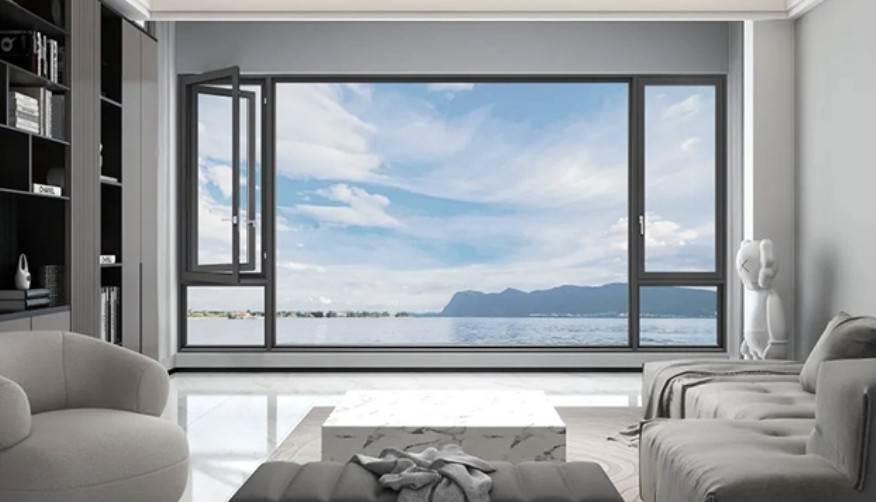
Energy efficiency is one of the biggest reasons modern buyers compare casement windows. A good casement window can close tightly because the sash presses against the frame. This can help reduce air leakage when the hardware and seals are well made.
The frame and glass matter even more. Thermal break aluminum frames help reduce heat transfer through the metal. Low-E insulated glass helps control solar heat and indoor heat loss. Some listed casement window products use double-pane Low-E glass, thermal break aluminum frames, integrated drainage, and weather-resistant seals for energy efficiency and soundproofing.
This matters in both hot and cold climates. In hot areas, better glass can reduce unwanted heat. In cold areas, it can help rooms stay warmer. For homes near busy roads, laminated or insulated glass can also improve comfort by reducing outside noise.
However, buyers should avoid treating “energy efficient” as a simple label. The real performance depends on frame structure, glass type, spacer, seal system, installation quality, and local climate.
Selection Point | Why It Matters | What to Check |
Frame system | Affects strength and heat transfer | Thermal break, profile depth, finish |
Glass unit | Affects comfort and noise control | Low-E, double glazing, laminated glass |
Sealing system | Affects air and water tightness | Gaskets, compression, hardware pressure |
Drainage design | Helps manage rainwater | Drain holes, slope, sill design |
Installation | Controls final performance | Measurement, alignment, sealing method |
Note:Project-specific energy data should be confirmed with test reports before bulk purchasing.
Casement windows are practical because they open wide. This helps fresh air enter faster. In many rooms, they can catch side breezes better than windows that open only halfway.
They also support natural light. Large-format casement window options are listed in the product category, and this points to a common modern design goal: more daylight and a clearer view. For apartments and villas, this can make rooms feel larger and more open.
Noise control is another comfort factor. Some casement window products highlight noise reduction, laminated glass, seals, and soundproofing performance.This is useful for homes near roads, schools, commercial areas, airports, or dense urban streets.
Good comfort comes from the full system. A quiet room needs more than thick glass. It also needs airtight seals, correct frame installation, stable hardware pressure, and no gaps around the wall opening. Poor installation can weaken a strong window system.
Modern homes must handle real weather. Rain, wind, heat, humidity, and dust all affect window performance. Casement windows can work well in these conditions when they use strong frames, stable seals, and drainage design.
Official casement product information mentions 90° outward opening, rainwater drainage systems, weather-resistant seals, water resistance, and condensation-proof options. These features are relevant for rainy regions, high-rise projects, coastal areas, and homes exposed to strong wind.
Aluminum is also a good match for long-term use. It is strong, stable, and suitable for slim modern frames. A powder-coated or treated finish can improve durability and reduce maintenance. For coastal or humid projects, the surface finish and hardware material should be reviewed carefully.
The key risk is not the window style itself. The risk is poor matching. A light-duty window in a high-wind area can create problems. A standard glass unit in a noisy district may disappoint buyers. A good procurement process should match each room to the right glass, frame, and hardware level.
Tip:For coastal, high-rise, or heavy-rain projects, ask for wind-load, water-tightness, and corrosion-resistance details before approval.
Casement windows are not the only modern option. They should be compared with sliding, picture, awning, and tilt-and-turn windows.
Sliding windows save space because the sash moves sideways. They work well near balconies, walkways, and tight exterior areas. But they may not open as wide as casement windows. They may also seal differently because the sash slides along tracks.
Picture windows give the cleanest view because they do not open. They are ideal for large fixed glass areas. But they cannot provide ventilation. A modern home may use picture windows for views and casement windows nearby for airflow.
Awning windows open from the bottom. They can be useful for smaller openings and rainy weather. They are often placed higher on walls or used in bathrooms. Casement windows may be better when the room needs a taller opening and stronger side ventilation.
Tilt-and-turn windows offer flexible opening modes. They can tilt for gentle ventilation and turn for wider access. They may cost more and need more detailed hardware planning. Casement windows can be simpler for many standard residential projects.
Window Type | Best Use | Main Limitation |
Casement windows | Ventilation, sealing, modern homes | Needs opening clearance |
Sliding windows | Compact spaces, balconies | Smaller open area |
Picture windows | Views and daylight | No ventilation |
Awning windows | Small openings, rain ventilation | Limited size range |
Tilt-and-turn windows | Flexible ventilation | Higher hardware complexity |
Casement windows work especially well in villas and custom homes. These projects often need custom sizes, color matching, better glass, and a premium look. The window can support both design and performance when specified well.
They also suit apartments and high-rise buildings, but planning must be stricter. Opening limits, wind pressure, safety rules, cleaning access, and local building codes should be checked early. For higher floors, hardware quality and safety features become more important.
In hot, rainy, or humid climates, casement windows can also make sense. Thermal break frames, Low-E glass, drainage systems, and weather-resistant seals help protect comfort. For projects near roads, acoustic glass and better sealing should be considered.
They can also serve residential-commercial spaces. Serviced apartments, boutique hotels, rental homes, offices, and mixed-use buildings may need windows that look modern but also perform well for daily use. In these projects, consistency, packaging, installation guidance, and after-sales support become part of the buying decision.
Start with the frame. Aluminum profile depth, wall thickness, thermal break design, and finish quality can affect strength, insulation, and appearance. Larger sashes need stronger frames and suitable hardware.
Next, check the glass. Double glazing is common for modern homes. Low-E glass helps manage heat. Laminated glass can improve safety and sound control. Frosted glass may suit bathrooms or privacy areas. The glass should match the room, not just the budget.
Then review the hardware. Hinges, handles, locks, restrictors, and multi-point locking systems affect daily use. Some casement window products also mention compatibility with handles and sensors, which may help smart-home projects.
Finally, review installation and service. Official company information highlights customized door and window services, product consultation, measuring, installation guidance, and maintenance support. For project buyers, this can reduce risk after delivery.
Note:A premium window can still fail if measurement, wall sealing, or hardware adjustment is poor.
Casement windows can fit modern homes very well when buyers want airflow, energy savings, weather protection, and clean design. SUNGYE offers aluminum casement window solutions with thermal break frames, Low-E glass, drainage design, sound insulation, customization, and service support. These features help homes feel brighter, quieter, safer, and more comfortable.
A: Casement windows are side-hinged windows that open outward or inward for wide airflow.
A: Yes, casement windows suit modern homes needing clean design, sealing, and ventilation.
A: Casement windows usually open wider and seal tighter, but sliding windows save space.
A: They can cost more when using thermal break frames, Low-E glass, or premium hardware.
A: Choose drainage design, strong seals, correct measurement, and professional installation.
A: Casement windows can be efficient when paired with insulated glass and thermal break frames.


